The same drain clogging twice in a month isn’t bad luck — it’s a pattern. Plunging buys you a day, but it doesn’t explain why the clog came back. Here are the real causes of recurring drain clogs, and the fixes that actually last.
If you’ve cleared the same drain more than once, the blockage is either something you keep putting in — or something already wrong with the pipe. This guide covers both, and tells you which fixes you can do yourself and which need a professional.
1. What You’re Putting Down the Drain
Most recurring clogs start at the sink, not in the pipe. The usual suspects:
Cooking grease and oils — they coat pipe walls as they cool, catching food and soap on the way
Coffee grounds — they clump and settle instead of washing away
Rice and pasta — they swell with water and keep expanding in the line
Soap scum — especially with hard water, it forms a waxy film inside pipes
Hair — the number-one shower and bathroom sink culprit
Real solution: Scrape grease into a container and trash it, keep a screen over every drain, and cut the habit of using the disposal as a garbage can. This alone eliminates most kitchen and bathroom reclogs.
2. Partial Blockage Further Down the Line
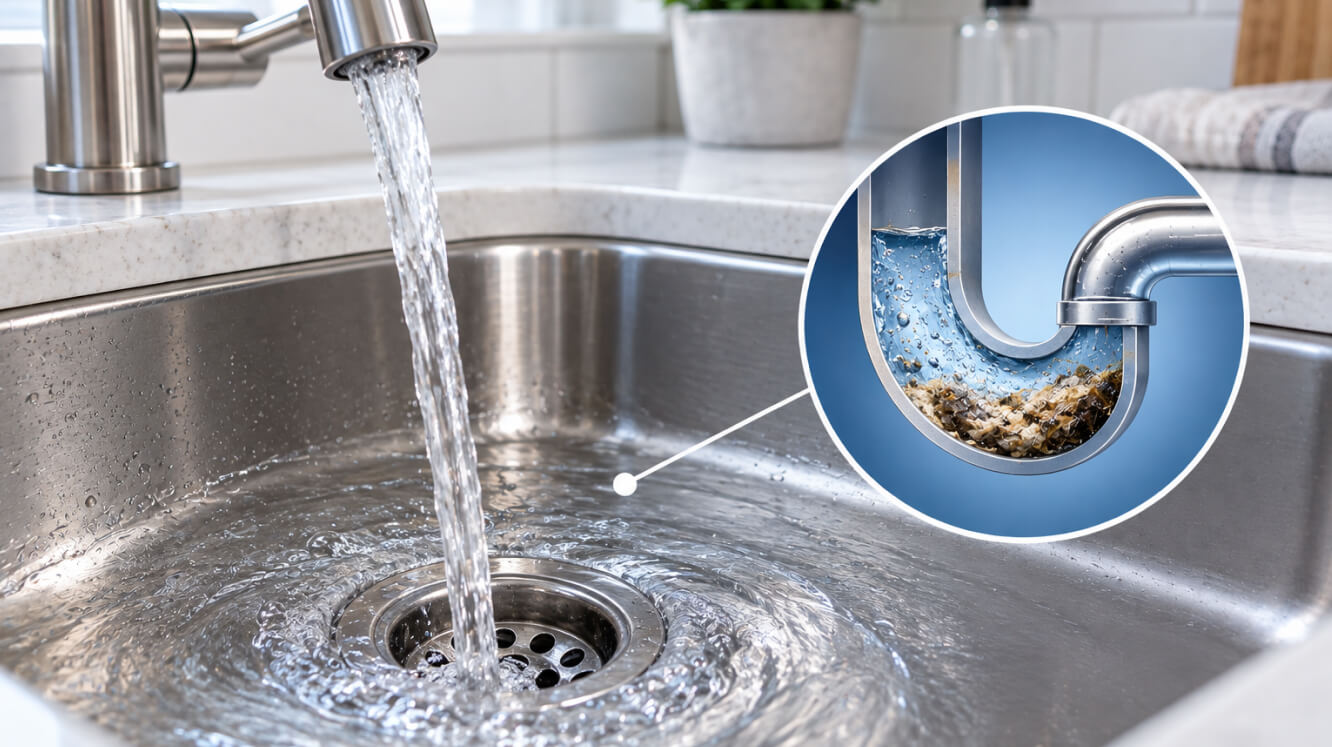
If plunging works but the drain re-clogs within days, there’s likely a partial obstruction your plunger never reaches — a wad of hair and soap at the P-trap, a grease shelf further down, or roots intruding at a joint. Each plunge clears the water above it and leaves the obstruction intact.
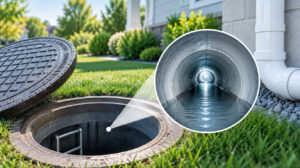
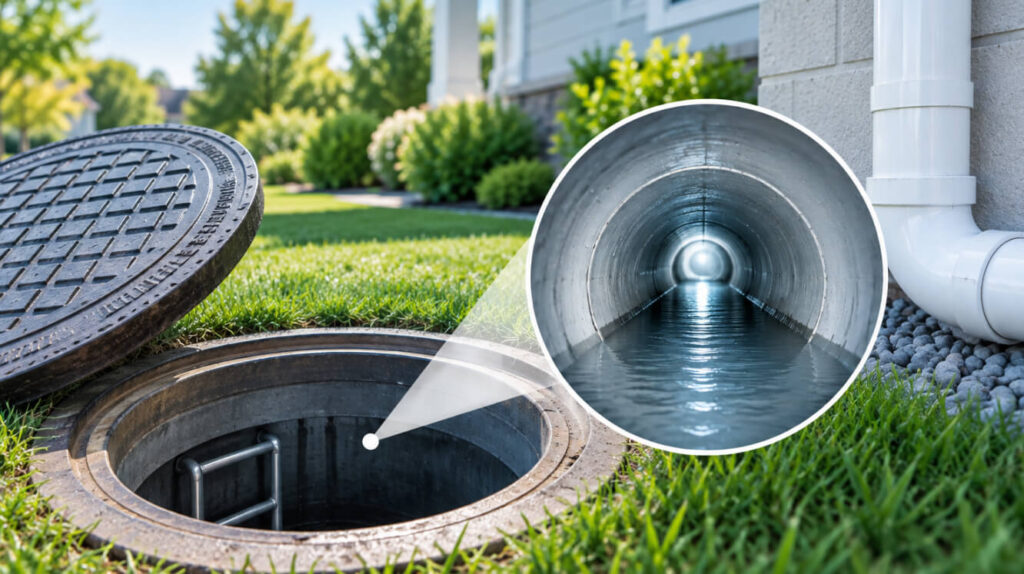
Real solution: A drain snake or auger can pull out hair clogs and light buildup yourself. If the clog is deeper than a few feet or comes back after snaking, it’s in the main line — that’s a camera inspection job.
3. Tree Root Intrusion
Roots seek water and enter sewer lines through tiny joints and existing cracks. Once inside, they grow into a mesh that catches everything flowing past. Warning signs: multiple fixtures backing up together, gurgling toilets, and clogs that return within weeks of snaking. Older clay and cast iron lines are especially vulnerable.
Real solution: Professional root cutting or hydro-jetting clears the line, but roots grow back. Ask about root treatment, spot repair of the entry point, or trenchless lining if intrusion is chronic.
4. Bellied or Sagging Pipes
Over time, sections of pipe can sink into the soil beneath, creating a low spot where waste pools instead of flowing through. A belly collects debris until the flow chokes off, then drains fine again after a cleaning — until it fills back up. The signature: the same clog in the same line on a predictable cycle.
Real solution: Only a camera inspection can confirm a belly. Fixing it means regrading and replacing the affected section — not another round of snaking.
5. Pipe Scale, Corrosion, and Narrow Lines
Old galvanized pipes rust from the inside, narrowing the diameter until even a small amount of debris snags. Cast iron scales and roughens. If your home is 50+ years old and every drain seems sluggish, the pipe itself may be the problem — not what you’re flushing.
Real solution: Descaling or descaling-plus-lining can restore flow without excavation in some cases. Severely corroded sections need replacement. A camera inspection tells you which.
6. Poor Venting or Incorrect Pipe Slope
Drains rely on airflow through your vent stack to pull water through. A blocked vent (leaves, bird nests, ice) causes slow drains and gurgling everywhere in the house, even when nothing is physically clogged. Poorly installed pipe with insufficient slope has the same effect: water stands, debris settles.
Real solution: A plumber can check and clear the vent stack from the roof. Slope issues require repiping a section — a job no chemical cleaner will ever fix.
Chemical Cleaners: Why They’re Not the Answer
Drain openers dissolve some organic material, but they don’t remove grease shelves, hair mats, or roots — and repeated use corrodes older metal pipes and loosens joints. If a chemical cleaner “works” twice and stops working, you’ve etched the surface without fixing the blockage. Mechanical cleaning gives you a diagnosis along with the fix.
When to Call a Professional
Call a plumber when: the same drain clogs more than once a month, multiple fixtures back up together, plunging and snaking stop working, or you notice sewer odors. Those are structural symptoms, and each one gets cheaper to fix the earlier it’s caught.
Frequently Asked Questions
Why does my sink clog every week?
A weekly clog points to something constant: grease or coffee grounds going down regularly, a partially blocked trap, or a partial obstruction further down the line. Change what you flush first; if it recurs, get a camera inspection.
Are enzyme drain cleaners safe for pipes?
Yes — enzyme and bacterial cleaners are gentler than chemical openers and can help with organic buildup as maintenance. They won’t clear hair mats, grease plugs, roots, or structural problems.
How much does it cost to snake a main line?
It varies by region, line length, and accessibility. Snaking is usually a straightforward, low-cost service; camera inspection and any needed repair are quoted separately. Get the price in writing before work begins.
When is a clog an emergency?
When sewage is backing up into the house, a toilet won’t stop overflowing, or more than one fixture is blocked at once, stop using water and call a plumber the same day.
A clog that keeps coming back is a symptom, not a nuisance. Fix what goes down the drain, and if the pattern continues, get the pipe inspected — the camera finds what the plunger never will.