Sewer lines fail quietly, then all at once. By the time sewage backs up into your shower, the repair has usually gone from a routine cleaning to an excavation job. The good news: your sewer line gives you warning first — you just have to know what you’re looking at.
Here are the seven warning signs your sewer line needs attention, and what each one means.
1. Multiple Drains Clog at the Same Time
A single clogged sink is a local problem. But when the toilet gurgles every time the washing machine drains, or the shower backs up whenever the toilet flushes, the blockage is downstream — in the shared main line. Slow drainage in the lowest fixture in your home (usually a basement floor drain) is a classic early signal.
What to do: If a plunger doesn’t clear it, stop. Repeated snaking can damage an already-deteriorating pipe.
2. Sewer Smell Inside or Outside the House
A persistent rotten-egg or sewage odor means either a dried-out trap or — worse — a crack or break in the line letting gas escape. If running water doesn’t clear the smell, the problem is structural.
What to do: Don’t cover it with air freshener. Gas escaping from a broken line is a health hazard and needs a camera inspection.
3. Sewage Backing Up Into Fixtures
Sewage coming up through the tub, shower, or floor drain when you flush or run water is a main-line backup in progress. This is an urgent problem: contaminated water in your living space poses a direct health risk.
What to do: Stop using all water in the house, shut off the main if needed, and call a plumber immediately. This one is never a DIY job.
4. Lush, Green Patches in the Yard
An oddly green, fast-growing strip of grass over the sewer line path is often a leak feeding fertilizer into the soil. Watch for the opposite too: a sunken, soggy, or consistently wet spot where there’s no other water source.
What to do: Note the location and have the line inspected — a small leak now becomes a sinkhole later.
5. Repeated Main-Line Backups
One backup can be a fluke — tree roots, flushed wipes, a toy. Two or more within a year means something in the line is attracting or catching debris: root intrusion, an offset joint, or a bellied (sagging) section. Each backup also leaves residue that makes the next one easier.
What to do: Get a camera inspection after the second occurrence. Recurring backups are the line telling you it’s no longer smooth inside.
6. Pest or Root Intrusion Clues
Sudden rodent or insect activity around drains, or visible tree roots pushing through cracks in the foundation or driveway, suggest roots have found the line. Tree roots grow toward water and enter through even hairline joints.
What to do: Ask about root cutting and treatment. If roots are chronic, the joint is compromised and a repair or lining should be considered.
7. Old Age + Old Pipe Material
If your home is over 50 years old and the line is original clay, cast iron, or Orangeburg, you’re on borrowed time regardless of current symptoms. Clay cracks, cast iron corrodes and narrows, and Orangeburg deforms. An inspection before symptoms appear is far cheaper than an emergency excavation.
What to do: Schedule a baseline camera inspection so you have a “before” record — it also helps with home sales.
What a Professional Inspection Involves
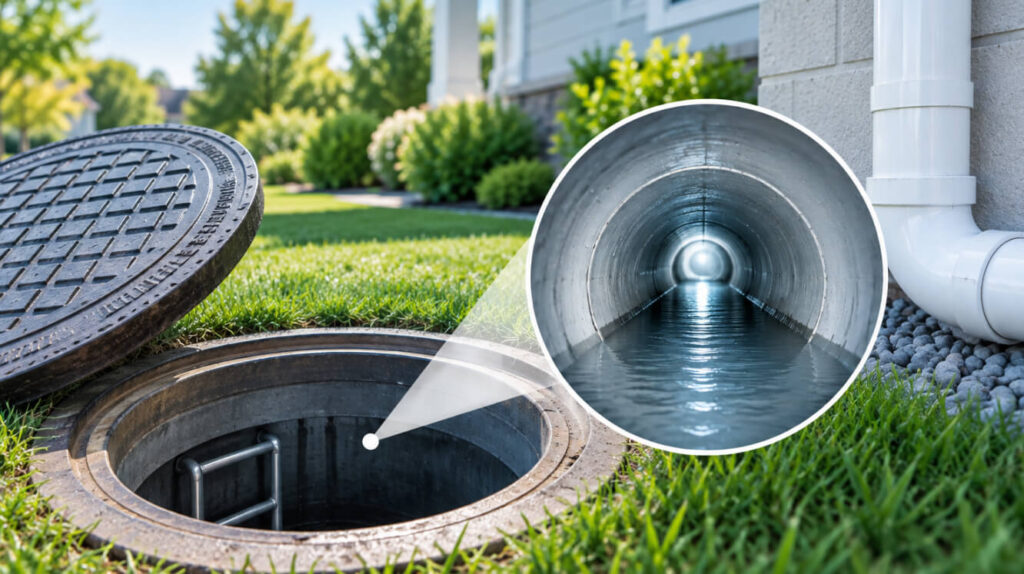
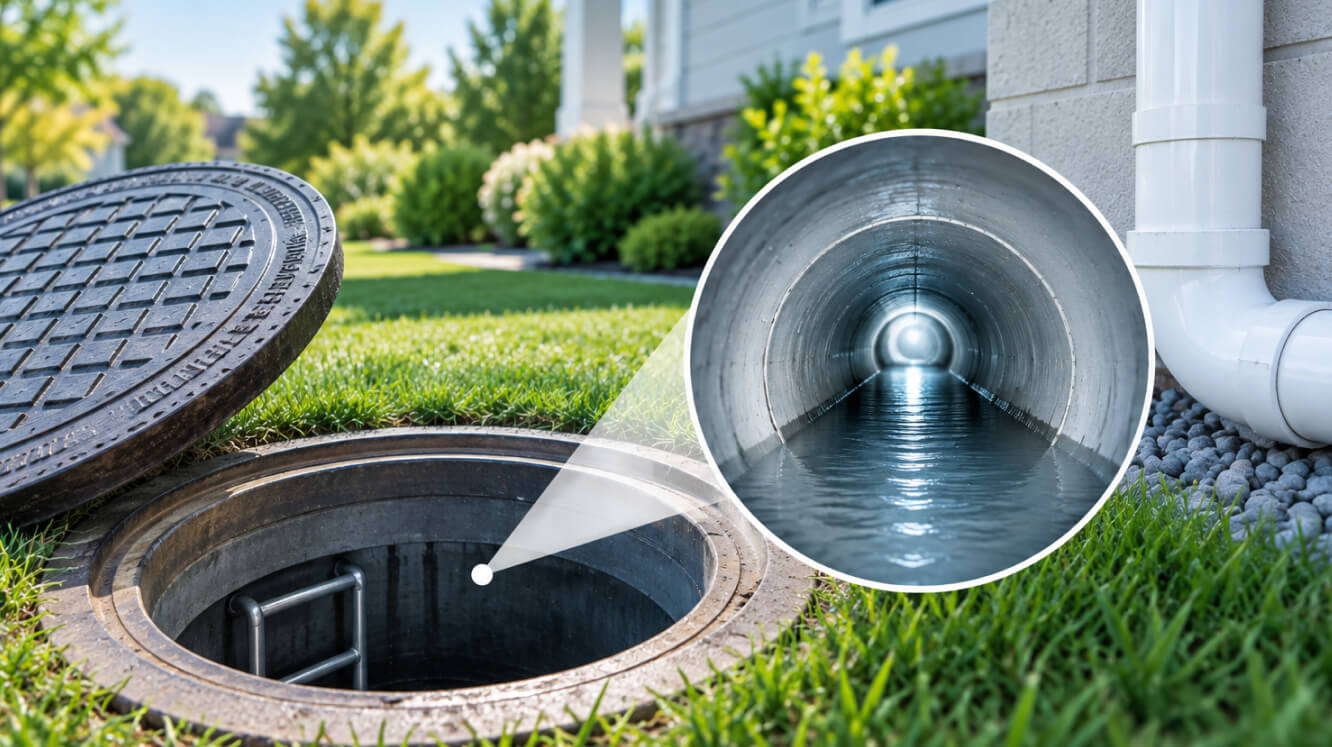
A sewer camera inspection feeds a camera through the line and shows you real-time footage of cracks, roots, bellies, and blockages. It typically takes under an hour and tells you exactly where the problem is — so you pay for a targeted repair instead of guessing.
Common fixes escalate in cost:
Snaking/hydro-jetting — clears soft blockages and light roots
Spot repair — digs up one damaged section
Trenchless lining — relines the pipe without digging up the yard
Full replacement — last resort for collapsed or failed lines
When to Call Immediately
Sewage backing up, sewage outside the house, or a sudden collapse sign (sinking ground near the line) are same-day emergencies. Everything else on this list should be inspected within days, not months.
Frequently Asked Questions
How do I know which pipe is clogged — a drain or the sewer line?
If only one fixture drains slowly, it’s a local clog. If multiple fixtures back up together or the toilet bubbles when other water runs, the blockage is in your main sewer line.
Can tree roots really break a sewer pipe?
Yes. Roots enter through tiny joints and gaps seeking water, then expand as they grow. Root intrusion is the most common cause of recurring sewer backups in older homes.
How often should I have my sewer line inspected?
Homes over 30 years old benefit from an inspection every 3–5 years, and always before buying or selling a property. Newer homes with PVC lines typically need less frequent checks.
Is a sewer line backup covered by homeowners insurance?
Usually not — most policies exclude sewer and drain backups unless you add specific coverage or a rider. Check your policy and consider a water backup endorsement.
Catch it at the warning-sign stage and you’re paying for a cleaning. Catch it at the backup stage and you’re paying for a repair — or a yard. If two or more signs above sound familiar, book a camera inspection.